How Much Sleep Do You Need? Sleep, Heart Health, and Longevity
How sleep affects heart health, blood pressure, metabolism, and longevity—with practical targets, Life’s Essential 8 scoring, insomnia and sleep apnea guidance.
On this page
Sleep is probably the health habit people are most willing to borrow against. We sacrifice an hour to finish work, watch another episode, answer emails, or simply have some time to ourselves after a long day. Unlike skipping a workout or eating poorly, losing an hour of sleep can feel relatively harmless—and may even be celebrated as a sign of discipline.
The problem is that your body eventually collects the debt. Even a few nights of insufficient sleep can affect attention, appetite, glucose regulation, and blood pressure. Over years, regularly sleeping too little is associated with higher rates of obesity, diabetes, cardiovascular disease, and premature death.[4][5][6][7]
That is why the American Heart Association added sleep to Life’s Essential 8, identifying it as a core measure of cardiovascular health in 2022.[1] But how much sleep do you actually need? And what is the return on investing another hour in bed? The answer is more interesting than simply telling everyone to sleep eight hours.
This guide is for adult education. It does not diagnose a sleep disorder or replace individualized medical care.
The 30-second takeaway
For most adults:
- Aim for 7–9 hours of sleep per night. Regularly sleeping less than seven hours is associated with worse health outcomes.[1][3]
- Consistency matters. Going to sleep and waking at roughly the same time may be nearly as important as total duration.
- Sleep affects more than fatigue. Insufficient sleep influences appetite, insulin sensitivity, blood pressure, and cardiovascular health.
- More is not always better. Very long sleep duration is also associated with worse outcomes, although that does not mean sleeping longer causes harm.
- Chronic insomnia deserves real treatment. Cognitive behavioral therapy for insomnia, or CBT-I, is first-line treatment; sleep hygiene alone is often insufficient.[25][26]
- Symptoms of sleep apnea deserve evaluation. Loud snoring, pauses in breathing, gasping, or persistent exhaustion despite enough sleep time are reasons to talk with a clinician.[19]
The goal is not a perfect smartwatch score. It is enough consistent, restorative sleep to support your health today and over the coming decades.
How much does sleep duration affect cardiovascular risk?
We spend considerable time discussing exercise, nutrition, cholesterol, and blood pressure. Sleep deserves a place in that conversation.
Observational studies show that people who consistently sleep too little—or have highly irregular sleep schedules—experience more cardiovascular disease and higher mortality. Experimental studies show that changing sleep can alter measurable outcomes, including energy intake, insulin sensitivity, and blood pressure.[4][6][7][20]
A dose-response meta-analysis of prospective cohort studies found a U-shaped relationship between sleep duration, cardiovascular events, and mortality. Cardiovascular risk was generally lowest around seven hours; each hour below seven was associated with approximately 6% higher relative risk. Risk also rose at longer durations, but long sleep can be a marker of underlying illness, depression, sleep disorders, or other health problems. These population associations do not tell us the expected benefit of changing one person’s sleep.[33]
Does better sleep actually change your health?
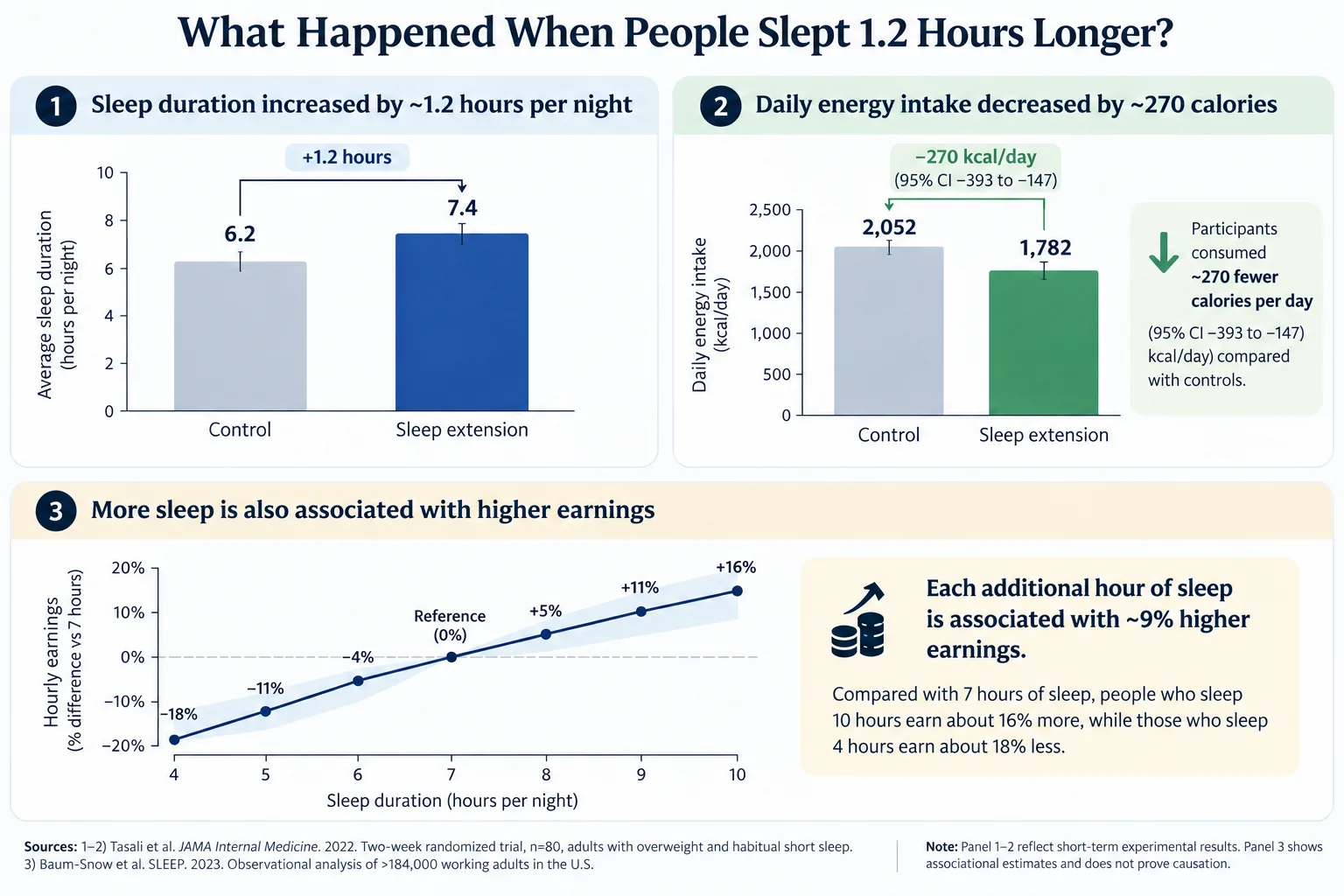
This is where the research becomes particularly interesting. In a two-week randomized trial, researchers enrolled 80 adults with overweight who usually slept less than 6.5 hours per night. Half received individualized counseling intended to extend their sleep; the others continued their usual habits. No diet or exercise program was prescribed.[20]
The sleep-extension group slept about 1.2 hours longer per night and consumed about 270 fewer calories per day than the control group. The trial was small and short, so we cannot assume that the effect continues indefinitely or predicts a specific amount of long-term weight loss. It does show that improving sleep can change behavior in ways that may make other health goals easier.
Why sleep matters for your heart, metabolism, and brain
The interesting question is not just whether people who sleep less have worse health. They may also have more stress, harder work schedules, or illnesses that disturb sleep. The stronger story comes from looking at long-term observations alongside experiments that deliberately restrict sleep. One shows what happens over years; the other helps explain how it could happen within days.
Your blood pressure does not wait years to notice
A review of 153 studies, including more than 5 million participants, found that short sleep was associated with a 17% higher relative risk of hypertension and a 26% higher relative risk of coronary heart disease. Definitions of short sleep varied between studies, and these are associations—not a forecast for an individual.[4]
Researchers have also brought the question into the laboratory. In a randomized crossover study, 20 healthy young adults spent nine nights with either four or nine hours of sleep opportunity. During restricted sleep, their 24-hour mean blood pressure was about 2.1 mm Hg higher, and norepinephrine, a chemical involved in the stress response, increased.[7]
That is a small study with a severe restriction, not a prediction of what one late night will do. But it helps connect the long-term pattern to a measurable change in the body. In another study, 495 adults were followed for five years: each additional hour of measured sleep was associated with 33% lower odds of developing coronary calcium. That result was observational and does not prove that adding an hour prevents plaque.[8]
What this means: sleep belongs in the conversation about blood pressure and cardiovascular prevention, alongside exercise, diet, and appropriate treatment.
Less sleep can work against your food and exercise goals
Imagine two periods of dieting with similar calorie restriction and similar weight loss. Would it matter how much the person slept? In a small crossover trial of 10 adults, it did. With 5.5 hours in bed rather than 8.5 hours, participants lost less fat—about 0.6 versus 1.4 kg—and more fat-free mass over two weeks.[9]
That is not a guarantee that sleeping longer will double your fat loss. It is evidence that the number on the scale can hide a different response to the same diet.
Glucose regulation changes too. In one experiment, six nights with four hours in bed impaired glucose tolerance. In another, four nights with 4.5 hours in bed reduced whole-body insulin sensitivity by about 16% compared with 8.5 hours.[5][6] A separate experiment found an 18% reduction in the muscle protein synthesis response after a night without sleep; this short-term measurement does not establish long-term muscle loss.[10]
These findings fit the broader observational pattern: short sleep was associated with higher risks of diabetes and obesity in the large review.[4]
What this means: if you are working on weight, blood sugar, or fitness, sleep is part of that effort.
Feeling used to short sleep is not the same as functioning well
One of the more unsettling findings in sleep research is that people do not always recognize their own decline. In a controlled study, restricting time in bed to six hours a night for two weeks produced accumulating attention deficits. On some tasks, performance approached that seen after up to two nights without sleep, while participants’ sense of sleepiness did not fully track the deterioration.[11]
The longer-term brain findings need more caution. In 7,959 people followed for about 25 years, persistently short sleep in midlife was associated with roughly 30% higher dementia risk. This does not establish that improving sleep prevents dementia.[12]
Sleep also appears relevant to immune defenses. In a study that measured sleep before exposing volunteers to a cold virus, those sleeping less than six hours were about four times as likely to develop a cold as those sleeping more than seven hours. Sleep duration itself was not randomly assigned.[13]
What can we say about longevity?
A 2025 meta-analysis of 79 cohorts reported higher mortality among both short and long sleepers: about 14% higher with less than seven hours and 34% higher with nine hours or more, relative to the study reference groups.[14] Those numbers describe populations. They do not mean an extra hour of sleep adds a predictable number of years to your life.
Long sleep is particularly difficult to interpret because illness can increase sleep need or time in bed. A genetic analysis linked a predisposition to short sleep with several cardiovascular conditions, but did not find the same pattern for long sleep. Such analyses have their own assumptions and cannot prove that long sleep is harmless for everyone.[15]
The practical case for adequate sleep is strong without promising a lifespan benefit: it supports blood pressure, glucose regulation, attention, and daily functioning. If your sleep need changes substantially or you remain exhausted despite long nights, discuss it with your clinician.
Where do you stand?
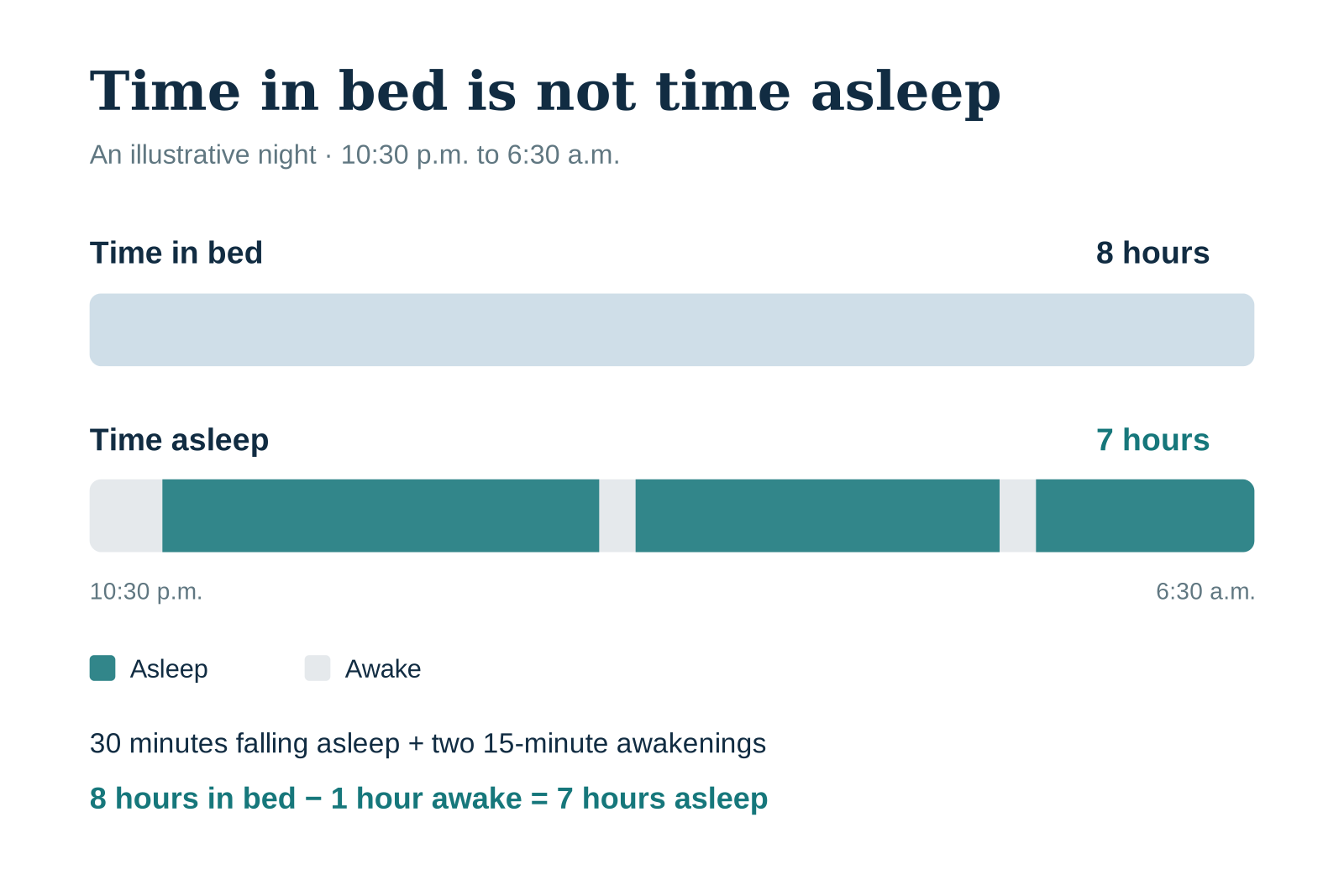
Start with estimated hours actually asleep, averaged over about two weeks. Time in bed is not the same thing. A simple diary can include bedtime, approximate time to fall asleep, awakenings, wake time, and how you feel during the day.
Short sleep is common. In a U.S. survey from 2014, more than one-third of adults reported fewer than seven hours; that is a historical estimate, not a measurement of today’s population.[2]
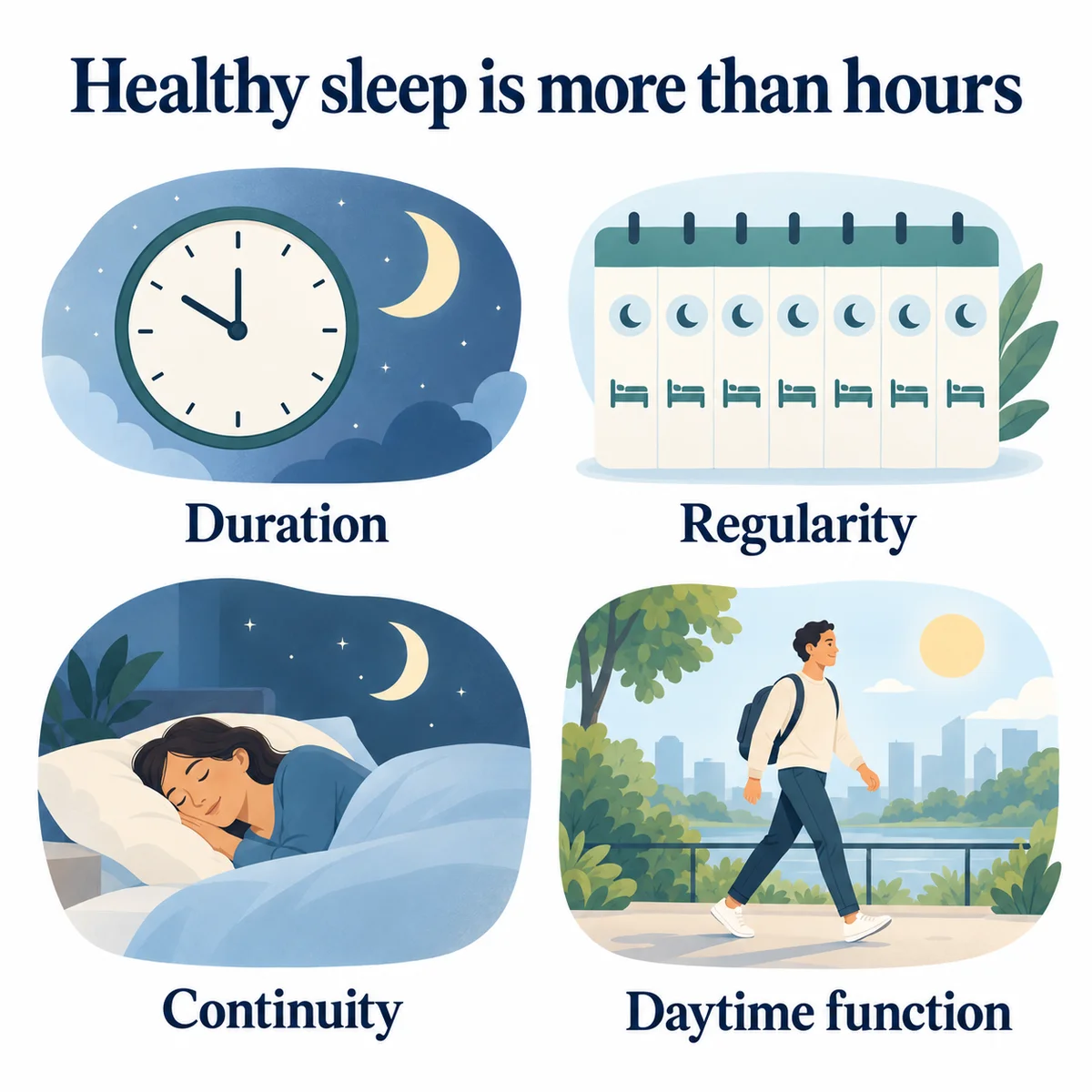
Look beyond the average number of hours:[16]
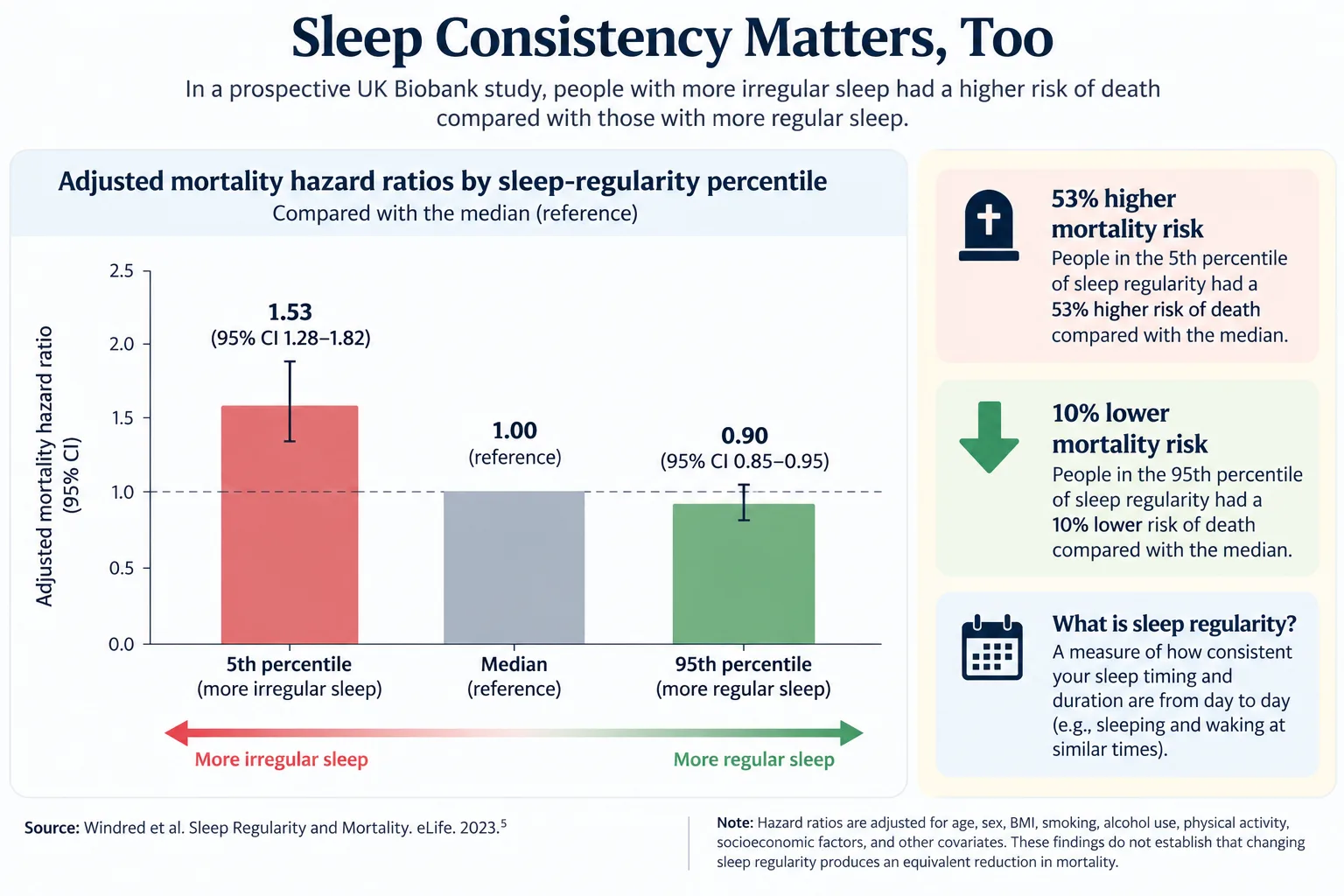
- Regularity: does your schedule swing widely between workdays and days off? In MESA, people in the most irregular sleep-timing group had about twice the rate of cardiovascular events as the most regular group. The categories used a statistical measure of variability across nights, not a rule that one late bedtime doubles risk.[17]
- Daytime function: are you alert, or do you repeatedly doze during reading, meetings, or driving?
- Breathing and continuity: do you snore loudly, wake gasping, or have witnessed pauses in breathing? Enough hours do not rule out sleep apnea.[19]
A prospective UK Biobank analysis of nearly 89,000 people also linked more regular sleep with lower mortality. Compared with the median sleep-regularity score, the adjusted all-cause mortality hazard ratio was 1.53 at the fifth percentile and 0.90 at the 95th percentile. This was observational: work schedules, health, and other factors may contribute, and the findings do not prove that changing sleep regularity produces an equivalent change in mortality.[18]
How Life’s Essential 8 scores sleep
The adult sleep component uses average hours per night:[1]
| Average sleep per night | Sleep component points |
|---|---|
| Under 4 hours | 0 |
| 4 to under 5 hours | 20 |
| 5 to under 6 hours | 40 |
| 6 to under 7 hours | 70 |
| 7 to under 9 hours | 100 |
| 9 to under 10 hours | 90 |
| 10 hours or more | 40 |
Life’s Essential 8 averages eight components into a cardiovascular health score. The sleep points are a duration measure, not a diagnosis or a complete assessment of sleep. A person can receive full duration points and still have insomnia, untreated sleep apnea, or substantial daytime sleepiness.[1][16]
You can explore the full score with the Life’s Essential 8 calculator. There is no reason to cut needed sleep just to improve a score.
What should you aim for?
- First goal: enough opportunity to get at least seven hours asleep regularly.
- A useful routine: roughly seven to nine hours, with a reasonably consistent wake time across the week.
- The fuller goal: enough restorative sleep to function well during the day, with persistent sleep problems evaluated rather than ignored.
More than nine hours can be appropriate for young adults, people recovering from lost sleep, and people who are ill.[3] Shift work, caregiving, pain, and other constraints can make a regular schedule difficult. Work toward a routine that is feasible in your circumstances. An occasional bad night is not a failed prevention plan.
How to improve your sleep
Start with the step that addresses your main obstacle. These are practical options, not a proven ranking of treatments.
1. Protect enough time for sleep
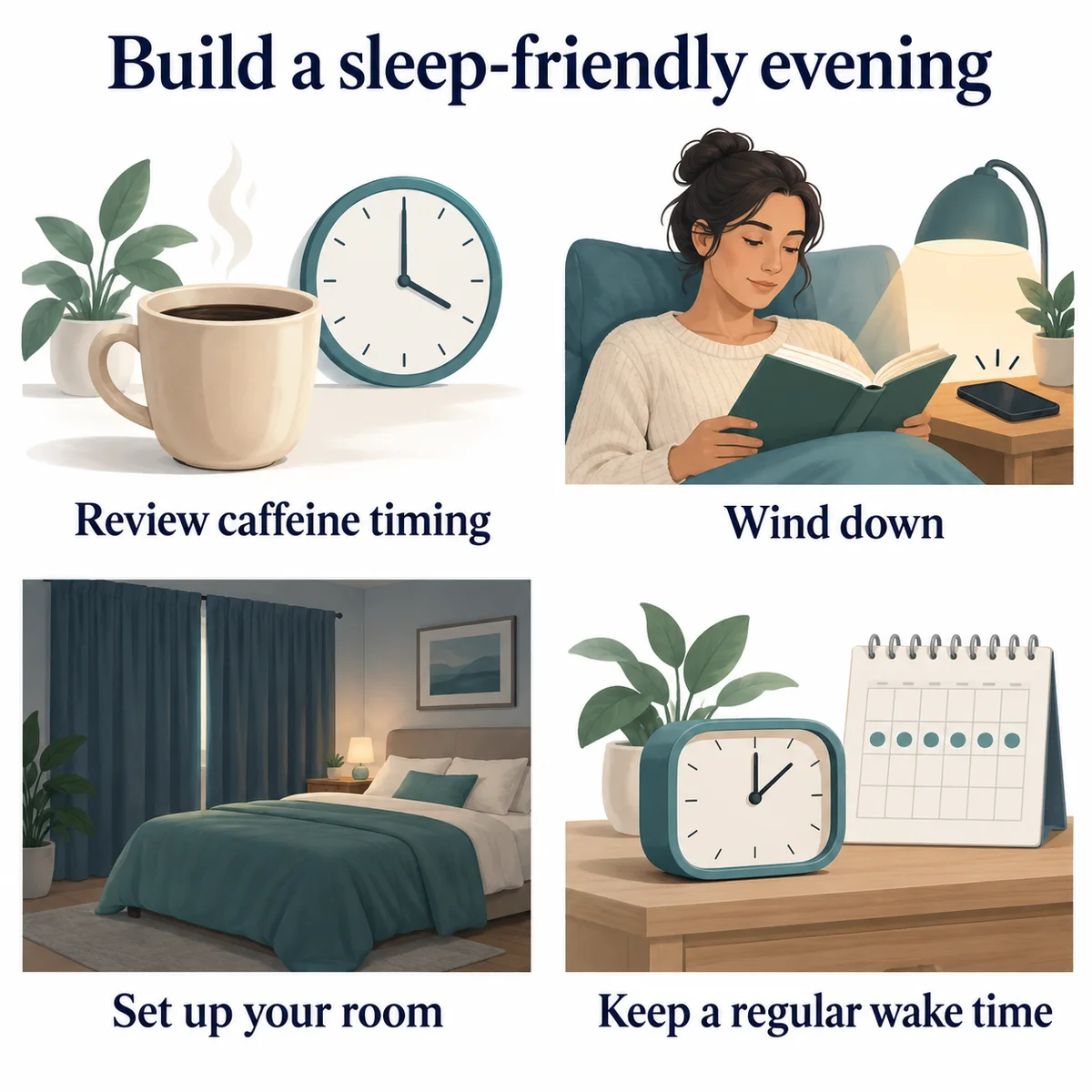
What to do: if your main problem is a short sleep window, work backward from your wake time to allow enough opportunity for seven to nine hours asleep. Keep wake time reasonably consistent. If you spend long periods awake in bed, repeatedly adding more time in bed may not help; see the insomnia section below.
Why it can help: there is evidence that extending sleep can change eating behavior. In a randomized trial of 80 adults with overweight who usually slept less than 6.5 hours, individualized counseling increased sleep by about 1.2 hours a night. Energy intake fell by about 270 calories a day compared with the control group over the short study period, without a prescribed diet.[20]
Common mistake: assuming weekend recovery cancels out repeated short nights. In one controlled experiment, weekend recovery sleep did not prevent the metabolic effects of recurring restriction.[21] Recovery can still be useful; a sustainable weekday sleep window is the more reliable foundation.
2. Review caffeine and alcohol
What to do: try a caffeine cutoff at least six hours before bed, earlier if you are sensitive. Avoid using alcohol as a sleep aid.
Why it can help: a study using 400 mg of caffeine found sleep disruption even when it was taken six hours before bedtime. The dose was substantial, and people vary in sensitivity.[22] Alcohol may speed sleep onset but can disrupt the second half of the night and alter REM sleep.[23]
Common mistake: judging an evening drink only by how quickly you fall asleep. Staying asleep and feeling restored matter too.
3. Make the transition to bed easier
What to do: keep your bedroom comfortably cool, dark, and quiet. Leave time to wind down from work, messages, or stimulating content. A comfortably warm shower or bath an hour or two before bed is another option; it should not be uncomfortably hot.
Why it can help: a meta-analysis found that warm bathing before bedtime could shorten time to sleep and improve sleep quality, although studies and protocols varied.[24]
Common mistake: treating sleep hygiene as the entire treatment for ongoing insomnia. A supportive environment helps, but it may not address the process keeping you awake.
4. Treat persistent insomnia as a treatable problem
What to do: if trouble falling or staying asleep is recurring and affecting your days, discuss it with your clinician. You do not need to wait three months to ask for help. Chronic insomnia generally involves problems at least three nights a week for at least three months, despite adequate sleep opportunity, with daytime consequences.
Why it can help: cognitive behavioral therapy for insomnia, or CBT-I, is recommended as first-line treatment. It addresses the behaviors and patterns of thinking that can perpetuate insomnia; it is more than a list of bedroom tips.[25][26] A meta-analysis of 20 trials found improvements of about 19 minutes in time to fall asleep and 26 minutes in nighttime wakefulness, with benefits appearing to persist.[27]
Common mistake: staying in bed frustrated for hours or assuming you simply need more discipline. One CBT-I strategy is to leave bed when unable to sleep, do something quiet in dim light, and return when sleepy, without clock-watching. A clinician can help tailor the full approach.
Medication can have a role when CBT-I is unavailable, insufficient, or when a temporary adjunct is appropriate. Decisions should account for benefits, side effects, and individual circumstances. Zolpidem, eszopiclone, and zaleplon carry an FDA boxed warning about rare serious injuries from complex sleep behaviors. Discuss changes with your prescriber.[25][28]
5. Ask about sleep apnea when symptoms fit
What to do: report loud snoring, witnessed pauses in breathing, gasping, or persistent unrefreshing sleep. These symptoms warrant discussion; they do not establish a diagnosis by themselves.
Why it matters: obstructive sleep apnea is common among people with cardiovascular disease. The AHA recommends screening in selected settings, including resistant or poorly controlled hypertension and recurrent atrial fibrillation after cardioversion or ablation.[19]
Treatment may include positive airway pressure, an oral appliance, weight management when appropriate, and other options chosen for the individual. Treatment can improve symptoms, but should not be presented as a guaranteed way to prevent a heart attack.[19]
Common mistake: dismissing snoring because it is familiar—or assuming that a person must have obesity to have sleep apnea.
Supplements and trackers
Melatonin is not a universal solution to poor sleep. A meta-analysis of trials in primary sleep disorders found modest average effects: about seven minutes faster sleep onset and eight minutes more total sleep.[29] In one analysis of supplements, measured melatonin content ranged from 83% below to 478% above the label; that sample does not describe every product.[30]
A wearable can help you notice patterns in sleep duration and timing. Its stage estimates are not equivalent to a clinical sleep study, and the AASM cautions against using consumer technology alone to diagnose or treat sleep disorders.[32] Use the trend alongside how you feel. One small experiment found that feedback about supposed sleep quality affected cognitive performance, a reminder that an alarming score can influence expectations.[31]
How much difference can better sleep make?
These studies give a sense of what has been measured. They are not a menu of benefits everyone should expect.
| Study comparison | Finding | What kind of evidence? |
|---|---|---|
| Sleep extension in adults with overweight who slept less than 6.5 hours | About 1.2 more hours of sleep and 270 fewer calories consumed per day relative to controls | Short randomized trial, 80 adults [20] |
| 5.5 versus 8.5 hours in bed during calorie restriction | Less fat loss: about 0.6 versus 1.4 kg over two weeks | Crossover trial, 10 adults [9] |
| Four versus nine hours of sleep opportunity over nine nights | About 2.1 mm Hg higher 24-hour mean blood pressure during restriction | Crossover trial, 20 adults [7] |
| 4.5 versus 8.5 hours in bed over four nights | About 16% lower whole-body insulin sensitivity during restriction | Crossover study, 7 adults [6] |
| CBT-I compared with control conditions | About 19 minutes faster sleep onset and 26 fewer minutes awake at night | Meta-analysis of 20 trials [27] |
| Each additional hour of measured sleep | 33% lower odds of new coronary calcium over five years | Observational study, 495 adults; not proof of prevention [8] |
The restriction experiments are generally small and short, and some use sleep loss far more severe than an ordinary late night. Relative risk estimates from cohorts are not absolute changes in your own risk. Improving a risk factor is also different from proving fewer heart attacks or a longer life. The evidence reviewed here does not establish those long-term benefits for a general sleep-extension program.[16]
A simple plan to start this week
- Today: choose a realistic wake time and review when you last have caffeine.
- This week: keep a brief sleep diary. Estimate hours asleep, note schedule changes, and record daytime alertness.
- Over the next month: if your sleep window is too short, create more opportunity gradually. If you are not sleepy earlier or spend the extra time awake, address that pattern rather than forcing bedtime.
- Track what matters: your average sleep, regularity, and daily function. If symptoms suggest insomnia or sleep apnea, arrange an evaluation.
When to talk with your doctor about sleep
Seek help for recurring difficulty sleeping, loud snoring or witnessed pauses in breathing, gasping, persistent daytime sleepiness, or a new need for much more sleep. Hard-to-control blood pressure and recurrent atrial fibrillation are additional reasons to discuss sleep apnea.[19]
If you are sleepy while driving, stop driving and arrange a safe alternative. Repeated drowsy driving deserves prompt evaluation. Do not wait for it to become a near miss.
If you use sleep medication most nights, ask for a review of the treatment plan rather than changing or stopping it on your own.
Frequently asked questions
How many hours of sleep do adults need?
Most adults should get at least seven hours regularly. Seven to nine hours is a useful general target, with individual variation. Duration is only one part of sleep health.[1][3]
Is six hours enough if I feel fine?
Usually not for most adults. People can underestimate the effects of repeated sleep restriction. In a controlled study, attention worsened over two weeks with six hours in bed even though participants did not fully recognize the decline.[11]
How much deep sleep or REM sleep should I get?
There is no universal nightly wearable target to chase. Stages vary with age and across nights, and consumer devices estimate them indirectly. Focus first on enough sleep, regularity, daytime function, and evaluation of persistent symptoms.[32]
Can I catch up on weekends?
Extra sleep can help after a short night, but it is not a complete substitute for adequate regular sleep. A controlled study found that weekend recovery did not prevent metabolic changes from repeated restriction.[21]
Can insufficient sleep raise blood pressure?
Yes. Controlled sleep restriction has raised blood pressure in healthy adults. That supports a causal short-term effect, while long-term studies link habitual short sleep with hypertension.[4][7]
Is sleeping more than nine hours dangerous?
Long sleep is associated with worse outcomes in some population studies, but illness and other factors can explain part of that pattern. It is not a reason to deliberately restrict needed sleep. A substantial change in sleep need or persistent exhaustion warrants discussion.[3][14][15]
Does melatonin work?
It can help in some circumstances, but average benefits for primary sleep disorders were modest in the cited review. Product content can also vary. Persistent insomnia deserves an assessment of its causes and treatment options.[29][30]
Does alcohol help me sleep?
It may make you fall asleep sooner, but it can disrupt later sleep. Faster sleep onset is not the same as better sleep.[23]
Your next step
Choose one change you can repeat: protect a longer sleep window, move caffeine earlier, or make an appointment about symptoms you have been putting up with. The aim is a sustainable routine that leaves you rested, not a perfect tracker score.
References
- Lloyd-Jones DM, Allen NB, Anderson CAM, et al. Life's Essential 8: updating and enhancing the American Heart Association's construct of cardiovascular health: a presidential advisory from the American Heart Association. Circulation. 2022;146(5):e18-e43. doi:10.1161/CIR.0000000000001078 Read source.
- Liu Y, Wheaton AG, Chapman DP, et al. Prevalence of healthy sleep duration among adults: United States, 2014. MMWR Morb Mortal Wkly Rep. 2016;65(6):137-141. doi:10.15585/mmwr.mm6506a1 Read source.
- Watson NF, Badr MS, Belenky G, et al. Recommended amount of sleep for a healthy adult: a joint consensus statement of the American Academy of Sleep Medicine and Sleep Research Society. Sleep. 2015;38(6):843-844. doi:10.5665/sleep.4716 Read source.
- Itani O, Jike M, Watanabe N, et al. Short sleep duration and health outcomes: a systematic review, meta-analysis, and meta-regression. Sleep Med. 2017;32:246-256. doi:10.1016/j.sleep.2016.08.006 Read source.
- Spiegel K, Leproult R, Van Cauter E. Impact of sleep debt on metabolic and endocrine function. Lancet. 1999;354(9188):1435-1439. doi:10.1016/S0140-6736(99)01376-8 Read source.
- Broussard JL, Ehrmann DA, Van Cauter E, et al. Impaired insulin signaling in human adipocytes after experimental sleep restriction: a randomized, crossover study. Ann Intern Med. 2012;157(8):549-557. doi:10.7326/0003-4819-157-8-201210160-00005 Read source.
- Covassin N, Bukartyk J, Singh P, et al. Effects of experimental sleep restriction on ambulatory and sleep blood pressure in healthy young adults: a randomized crossover study. Hypertension. 2021;78(3):859-870. doi:10.1161/HYPERTENSIONAHA.121.17622 Read source.
- King CR, Knutson KL, Rathouz PJ, et al. Short sleep duration and incident coronary artery calcification. JAMA. 2008;300(24):2859-2866. doi:10.1001/jama.2008.867 Read source.
- Nedeltcheva AV, Kilkus JM, Imperial J, et al. Insufficient sleep undermines dietary efforts to reduce adiposity. Ann Intern Med. 2010;153(7):435-441. doi:10.7326/0003-4819-153-7-201010050-00006 Read source.
- Lamon S, Morabito A, Arentson-Lantz E, et al. The effect of acute sleep deprivation on skeletal muscle protein synthesis and the hormonal environment. Physiol Rep. 2021;9(1):e14660. doi:10.14814/phy2.14660 Read source.
- Van Dongen HP, Maislin G, Mullington JM, et al. The cumulative cost of additional wakefulness: dose-response effects on neurobehavioral functions and sleep physiology from chronic sleep restriction and total sleep deprivation. Sleep. 2003;26(2):117-126. doi:10.1093/sleep/26.2.117 Read source.
- Sabia S, Fayosse A, Dumurgier J, et al. Association of sleep duration in middle and old age with incidence of dementia. Nat Commun. 2021;12(1):2289. doi:10.1038/s41467-021-22354-2 Read source.
- Prather AA, Janicki-Deverts D, Hall MH, et al. Behaviorally assessed sleep and susceptibility to the common cold. Sleep. 2015;38(9):1353-1359. doi:10.5665/sleep.4968 Read source.
- Ungvari Z, Fekete M, Varga P, et al. Imbalanced sleep increases mortality risk by 14-34%: a meta-analysis. GeroScience. 2025;47(3):4545-4566. doi:10.1007/s11357-025-01592-y Read source.
- Ai S, Zhang J, Zhao G, et al. Causal associations of short and long sleep durations with 12 cardiovascular diseases: linear and nonlinear Mendelian randomization analyses in UK Biobank. Eur Heart J. 2021;42(34):3349-3357. doi:10.1093/eurheartj/ehab170 Read source.
- St-Onge MP, Aggarwal B, Fernandez-Mendoza J, et al. Multidimensional sleep health: definitions and implications for cardiometabolic health: a scientific statement from the American Heart Association. Circ Cardiovasc Qual Outcomes. 2025;18(5):e000139. doi:10.1161/HCQ.0000000000000139 Read source.
- Huang T, Mariani S, Redline S. Sleep irregularity and risk of cardiovascular events: the Multi-Ethnic Study of Atherosclerosis. J Am Coll Cardiol. 2020;75(9):991-999. doi:10.1016/j.jacc.2019.12.054 Read source.
- Windred DP, Burns AC, Lane JM, et al. Sleep regularity and mortality: a prospective analysis in the UK Biobank. eLife. 2023;12:e88359. doi:10.7554/eLife.88359 Read source.
- Yeghiazarians Y, Jneid H, Tietjens JR, et al. Obstructive sleep apnea and cardiovascular disease: a scientific statement from the American Heart Association. Circulation. 2021;144(3):e56-e67. doi:10.1161/CIR.0000000000000988 Read source.
- Tasali E, Wroblewski K, Kahn E, et al. Effect of sleep extension on objectively assessed energy intake among adults with overweight in real-life settings: a randomized clinical trial. JAMA Intern Med. 2022;182(4):365-374. doi:10.1001/jamainternmed.2021.8098 Read source.
- Depner CM, Melanson EL, Eckel RH, et al. Ad libitum weekend recovery sleep fails to prevent metabolic dysregulation during a repeating pattern of insufficient sleep and weekend recovery sleep. Curr Biol. 2019;29(6):957-967.e4. doi:10.1016/j.cub.2019.01.069 Read source.
- Drake C, Roehrs T, Shambroom J, et al. Caffeine effects on sleep taken 0, 3, or 6 hours before going to bed. J Clin Sleep Med. 2013;9(11):1195-1200. doi:10.5664/jcsm.3170 Read source.
- Ebrahim IO, Shapiro CM, Williams AJ, et al. Alcohol and sleep I: effects on normal sleep. Alcohol Clin Exp Res. 2013;37(4):539-549. doi:10.1111/acer.12006 Read source.
- Haghayegh S, Khoshnevis S, Smolensky MH, et al. Before-bedtime passive body heating by warm shower or bath to improve sleep: a systematic review and meta-analysis. Sleep Med Rev. 2019;46:124-135. doi:10.1016/j.smrv.2019.04.008 Read source.
- Qaseem A, Kansagara D, Forciea MA, et al. Management of chronic insomnia disorder in adults: a clinical practice guideline from the American College of Physicians. Ann Intern Med. 2016;165(2):125-133. doi:10.7326/M15-2175 Read source.
- Edinger JD, Arnedt JT, Bertisch SM, et al. Behavioral and psychological treatments for chronic insomnia disorder in adults: an American Academy of Sleep Medicine clinical practice guideline. J Clin Sleep Med. 2021;17(2):255-262. doi:10.5664/jcsm.8986 Read source.
- Trauer JM, Qian MY, Doyle JS, et al. Cognitive behavioral therapy for chronic insomnia: a systematic review and meta-analysis. Ann Intern Med. 2015;163(3):191-204. doi:10.7326/M14-2841 Read source.
- U.S. Food and Drug Administration. FDA adds Boxed Warning for risk of serious injuries caused by sleepwalking with certain prescription insomnia medicines. Drug Safety Communication. April 30, 2019. fda.gov Read source.
- Ferracioli-Oda E, Qawasmi A, Bloch MH. Meta-analysis: melatonin for the treatment of primary sleep disorders. PLoS One. 2013;8(5):e63773. doi:10.1371/journal.pone.0063773 Read source.
- Erland LA, Saxena PK. Melatonin natural health products and supplements: presence of serotonin and significant variability of melatonin content. J Clin Sleep Med. 2017;13(2):275-281. doi:10.5664/jcsm.6462 Read source.
- Draganich C, Erdal K. Placebo sleep affects cognitive functioning. J Exp Psychol Learn Mem Cogn. 2014;40(3):857-864. doi:10.1037/a0035546 Read source.
- Khosla S, Deak MC, Gault D, et al. Consumer sleep technology: an American Academy of Sleep Medicine position statement. J Clin Sleep Med. 2018;14(5):877-880. doi:10.5664/jcsm.7128 Read source.
- Yin J, Jin X, Shan Z, et al. Relationship of sleep duration with all-cause mortality and cardiovascular events: a systematic review and dose-response meta-analysis of prospective cohort studies. J Am Heart Assoc. 2017;6(9):e005947. doi:10.1161/JAHA.117.005947 Read source.
This guide is part of the MendelMD preventive cardiology library. Explore weight and heart health, blood sugar, and nutrition, or take the free Vital8 assessment.
Continue exploring

Mendel Jacobs, MD, MPH
Menachem "Mendel" Jacobs, MD, MPH is an Internal Medicine Resident at Yale School of Medicine pursuing academic cardiology. He publishes under Menachem Jacobs.
Connect on LinkedIn