Weight and Heart Health: What Your Numbers Mean and What You Can Do
Understand BMI, waist circumference, visceral fat, and realistic weight-loss goals—and how to put those numbers in context for your heart health.
On this page
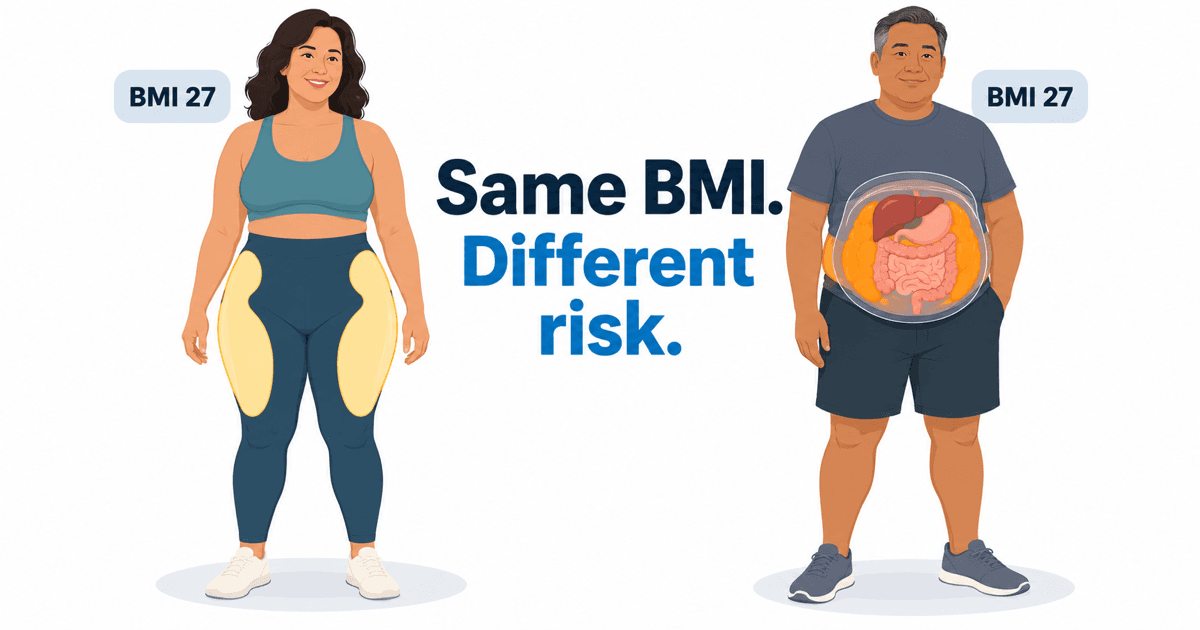
Body weight affects the heart, but the number on the scale is only part of the story. Two people can have the same body mass index (BMI) and different amounts of muscle, different fat distribution, and different blood pressure, glucose, and cholesterol levels.
Fat deep inside the abdomen behaves differently from fat under the skin. That is why this guide looks beyond a single measurement: BMI tells you about body size; waist circumference adds information about fat distribution; your blood pressure and blood tests help complete the picture. None is a verdict on your health or your worth.
If excess body fat is affecting your health, a modest, sustained reduction can help. You do not have to reach an “ideal” weight before seeing improvements. The useful question is what change would improve your health and be realistic to maintain.
This guide is for adult education, not an individual diagnosis or treatment plan. Weight goals should account for your health, medications, muscle mass, and circumstances.
The 30-second takeaway
Use BMI and waist size together, then interpret them alongside blood pressure, glucose, cholesterol, and how you feel. If weight loss is appropriate, a modest sustained change can help; reaching a particular BMI is not a prerequisite for progress.378
Where do you stand?
What is BMI, and what does it measure?
BMI is weight in kilograms divided by height in meters squared. It is inexpensive, easy to repeat, and useful for screening. The standard adult categories are:1
| Category | BMI, kg/m² |
|---|---|
| Underweight | Below 18.5 |
| Healthy weight, sometimes called “normal” weight | 18.5 to below 25 |
| Overweight | 25 to below 30 |
| Obesity, class I | 30 to below 35 |
| Obesity, class II | 35 to below 40 |
| Obesity, class III | 40 or higher |
These categories describe a measurement, not the whole person. BMI cannot distinguish muscle from fat or tell you where fat is stored. A muscular person may have a high BMI without excess body fat. An older adult who has lost muscle may have a reassuring BMI despite carrying substantial abdominal fat.
Why ancestry and age matter
Cardiometabolic risk can develop at a lower BMI in some populations, including many people of South or East Asian ancestry. The WHO expert consultation identified BMI values of 23 and 27.5 as additional public-health action points for Asian populations; it did not replace the international categories with one universal definition for every Asian adult.2
Specific screening and treatment thresholds vary by guideline and population. Age, muscle mass, and medical history also affect interpretation. A BMI within the standard range should not be used to dismiss an elevated waist, abnormal blood tests, or a strong family history.
What does waist circumference add?
Waist circumference is a practical marker of abdominal fat. It does not directly measure visceral fat, but it adds information BMI cannot provide. It is particularly useful when BMI is below 35; above that, it may add less to risk classification, although tracking waist size can still be useful.3
How to measure your waist
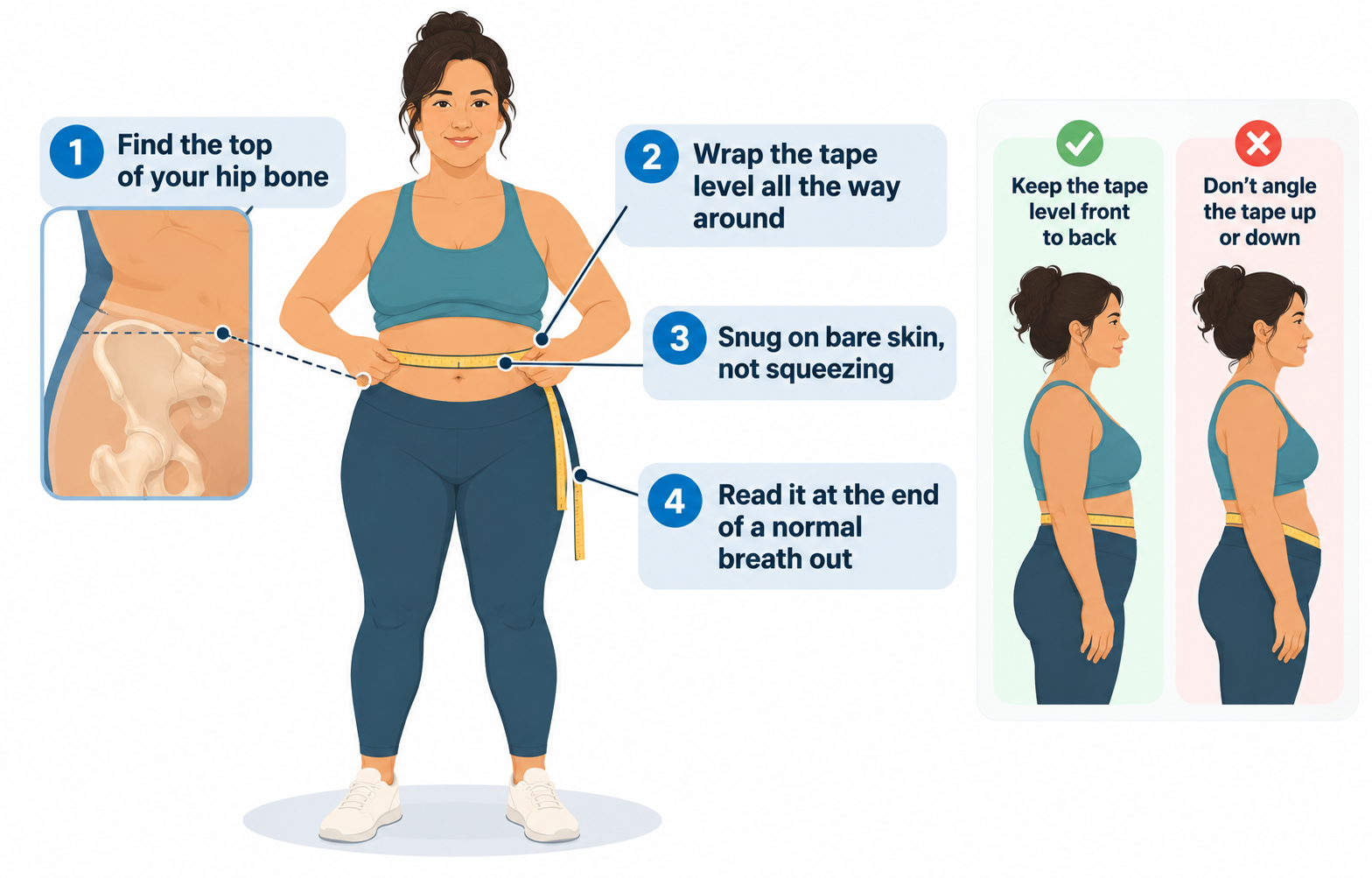
Use a flexible tape around your bare abdomen, just above the top of the hip bones. Keep it level all the way around, snug without squeezing the skin. Read the measurement after a normal breath out. Repeat using the same technique so that changes are meaningful.3
Commonly used thresholds for increased cardiometabolic risk include:4
| Population reference | Men | Women |
|---|---|---|
| Common U.S./European-reference thresholds | 102 cm (40 in) or more | 88 cm (35 in) or more |
| Common Asian-population thresholds | 90 cm or more | 80 cm or more |
These are screening thresholds, not sharp boundaries between safe and unsafe. Local guidance and population-specific thresholds differ. Being below a cutoff does not rule out risk, and being above it does not diagnose heart disease.
A normal BMI can hide abdominal fat
In the IDEA study, researchers examined more than 168,000 primary-care patients in 63 countries. A larger waist was associated with a higher prevalence of diabetes and cardiovascular disease, including within BMI categories. This was a cross-sectional study: it described associations with existing disease, rather than proving that waist size caused disease or predicting an individual's future event.5
| BMI and waist together | What to take from the combination |
|---|---|
| BMI in the standard range, smaller waist | Generally a more favorable body-size pattern; blood pressure, lipids, and other risks still matter. |
| Higher BMI, smaller waist | Consider muscle mass and check metabolic markers before drawing conclusions. |
| BMI in the standard range, larger waist | Abdominal fat may reveal risk that BMI alone misses. |
| Higher BMI, larger waist | Assess excess adiposity and its health effects; neither measurement determines individual risk by itself. |
This is a guide to interpretation, not a risk calculator or a ranking of people.
Waist-to-height ratio
Divide waist circumference by height using the same units. For example, a waist of 90 cm and height of 180 cm gives a ratio of 0.50. NICE uses a ratio of 0.5 or more to flag increased central adiposity in adults with BMI below 35. It is a useful screening prompt, not a diagnosis.6
Why visceral fat matters
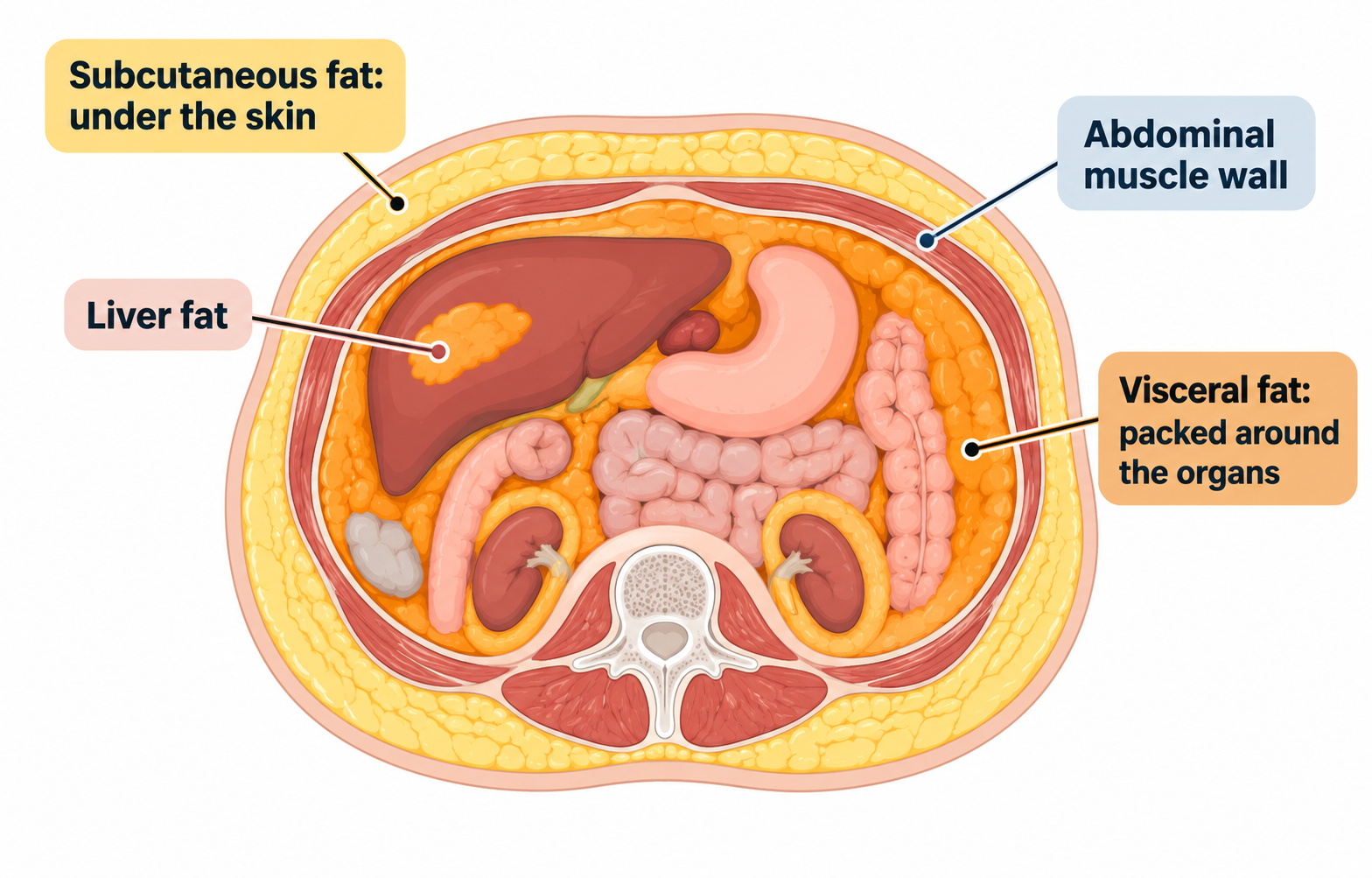
Subcutaneous fat sits beneath the skin. Visceral fat sits deeper in the abdomen, around internal organs. Ectopic fat accumulates within tissues such as the liver. These fat deposits have different relationships with insulin resistance and cardiovascular health.7
Excess adiposity can affect several connected systems:
| System | How excess fat can affect it |
|---|---|
| Blood pressure | Changes in nerve and hormone signaling and kidney sodium handling can raise pressure. |
| Blood sugar | Insulin resistance makes it harder to regulate glucose. |
| Blood lipids | Higher triglycerides and lower HDL often accompany insulin resistance; LDL-C and ApoB still need their own assessment. |
| Inflammation | Adipose tissue contributes inflammatory signals. CRP, made mainly in the liver, can rise in response. |
| Heart function and rhythm | Obesity is associated with heart failure, atrial fibrillation, and sleep apnea, through pathways that extend beyond artery plaque. |
These relationships help explain why the same person may have several risk factors at once. They do not mean every person with a larger waist has every problem, or that all effects occur through atherosclerosis.7
Do I need a body-fat scan or a smart scale?
For most people, the first useful assessment combines BMI and waist with medical history, blood pressure, and appropriate blood tests. A body-fat percentage alone does not replace those measures.
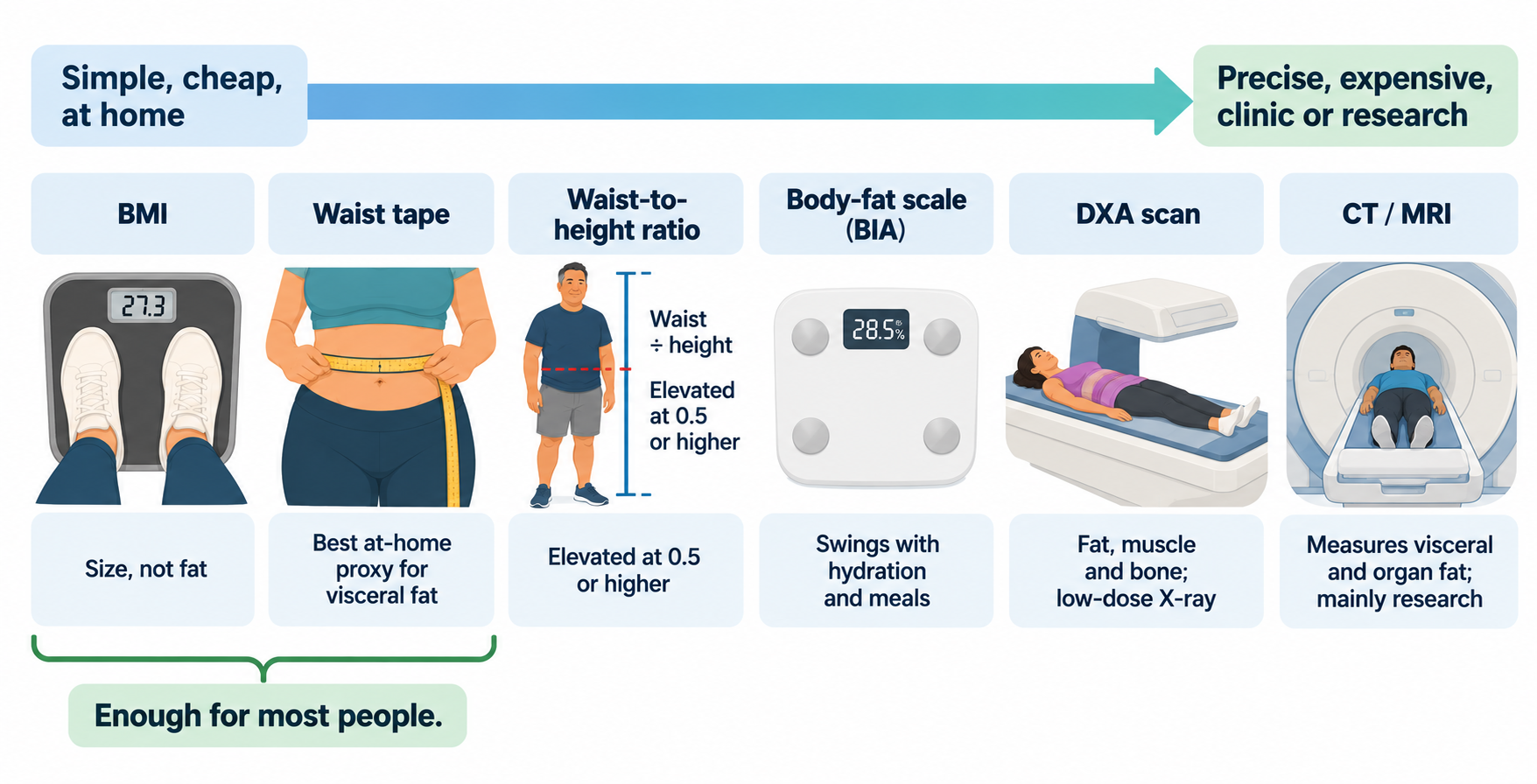
Home body-fat scales use bioelectrical impedance to estimate composition. Hydration, food, exercise, and the device's equations can change the result. A consistent trend is usually more useful than a single reading.
DXA estimates fat and lean tissue using low-dose X-rays. CT and MRI can characterize internal fat deposits, but are not routine screening tests simply because someone wants to understand their weight. CT also exposes you to radiation. Consider specialized testing when it would answer a specific clinical question, rather than chasing a supposedly perfect body-fat number.3
Can you have a high BMI and good metabolic health?
Yes. Some people with a higher BMI have normal blood pressure, glucose, and lipid measurements. Others have a BMI in the standard range and abnormal metabolic markers. Fitness and body composition help explain some of these differences.
Normal results are encouraging, but they are a snapshot rather than a lifetime guarantee. Conversely, a high BMI does not justify assuming that someone is inactive or has poor habits. The practical approach is to check the actual health markers, follow their trends, and consider symptoms and family history.7
Useful conversations include blood pressure, a lipid panel, and glucose or HbA1c when appropriate. Fitness, strength, sleep, and day-to-day function also matter.
What should you aim for?
If reducing excess body fat is appropriate for you, 5–10% of starting weight is a common initial goal. Smaller changes can help too. Benefits vary with the starting health problem, how weight changes, and whether the change is maintained.8
| Change in body weight | What the evidence supports |
|---|---|
| Around 3–5% loss | Can improve glucose and triglycerides; benefits do not require reaching a “normal” BMI. |
| Around 5–10% loss | A common first goal, with potential improvements in blood pressure, glycemic control, and other metabolic markers. |
| Larger sustained loss | May produce greater benefits for some conditions, but there is no percentage that guarantees diabetes remission or prevention of heart attacks. |
For someone starting at 200 lb, 5% is 10 lb, 10% is 20 lb, and 15% is 30 lb. Those are arithmetic examples, not three treatment targets everyone needs to pursue.
Improving risk factors is different from proving fewer heart attacks
In Look AHEAD, an intensive lifestyle intervention improved weight and several health measures in adults with type 2 diabetes, but did not significantly reduce the trial's primary cardiovascular outcome.9
In SELECT, semaglutide reduced major cardiovascular events in people with established cardiovascular disease and overweight or obesity, without diabetes. That trial tested a particular medication in a particular population. It does not establish that losing 15% of body weight by any method guarantees fewer events or deaths.10
This distinction does not make lifestyle changes unimportant. It makes the promise more accurate: improved glucose, blood pressure, fitness, or function can be valuable, while evidence for preventing clinical events depends on the intervention and the population.
Weight loss also does not replace LDL cholesterol management. Triglycerides often respond, but LDL-C may still need separate attention.
How to make progress sustainable
Choose a food pattern you can maintain. Weight loss generally requires an energy deficit, but a fixed calorie prescription is not right for everyone. Work around your preferences, schedule, medical conditions, and access to food. The nutrition guide offers a practical starting point.
Build activity gradually. A usual adult goal is at least 150 minutes a week of moderate activity, alongside muscle-strengthening activity. Your starting point may be much smaller. Activity supports health even when weight changes little; preserving strength and muscle matters during weight loss.4
Use support, not willpower alone. Regular follow-up, practical meal planning, and a manageable way to track progress can help. Medication and metabolic surgery are also evidence-based options for eligible people. They are treatments to discuss, not a judgment about effort.3
Plan for maintenance. Appetite, routines, illness, and medication changes can all affect weight. A plan that can be adjusted over time is more useful than a short, punishing program.
If you use insulin, other glucose-lowering medicines, or blood-pressure medicines, tell your clinician when you are making substantial changes. Treatment may need adjustment as your readings change; do not change doses yourself.
A simple plan to start this week
- Establish a useful baseline. If appropriate, measure your waist consistently and interpret it alongside BMI, rather than reacting to either alone.
- Look at the health markers. Review your blood pressure, glucose, and lipid results with your clinician if they are overdue or abnormal.
- Choose one repeatable change. Swap a regular sugary drink, plan a satisfying meal, or add a short walk that fits your day.
- Track a trend that helps you. Weight, waist, walking consistency, strength, or blood pressure may be useful. Tracking should support care, not become distressing.
- Ask for help when needed. A clinician or registered dietitian can help set an appropriate goal and identify barriers.
Intentional weight loss is not automatically appropriate for everyone with a higher BMI. Pregnancy, frailty, unintentional weight loss, and a history of an eating disorder require a different conversation.
When should I discuss weight with a clinician?
A visit is useful if you have an elevated waist, a high BMI with possible weight-related health effects, abnormal metabolic tests, or symptoms such as snoring and daytime sleepiness. You can also ask for help without meeting a numerical threshold.
Bring up unexplained weight changes, medication effects, previous attempts that were difficult to maintain, and any concerns about food or body image. Good care should be collaborative and respectful. It is reasonable to ask to focus on health markers, function, and behaviors rather than weight alone.
How weight fits into Vital8
Body size is one part of the Vital8 framework, alongside nutrition, activity, tobacco exposure, sleep, blood lipids, glucose, and blood pressure. BMI-based scores share BMI's limitations: they do not directly measure muscle, visceral fat, or individual cardiovascular risk.
Use the Vital8 methods to understand its scoring rules, or explore the separate Life's Essential 8 calculator. Read a body-size score alongside the other domains, rather than assuming that the lowest score automatically identifies your most important treatment priority.
A change in waist, fitness, or blood pressure may be worthwhile even before a BMI-based score changes.
Frequently asked questions
Is BMI an accurate measure of health?
It is a useful screening measure of body size, not a comprehensive health assessment. Muscle mass, fat distribution, age, and metabolic measurements affect its interpretation.
Which matters more: BMI or waist size?
They answer different questions. BMI captures size relative to height; waist size adds information about abdominal fat. Use them together and interpret both alongside your other risk factors.
Can a normal BMI hide risk?
Yes. A larger waist, high blood pressure, abnormal glucose, or elevated atherogenic lipoproteins can matter even when BMI is within the standard range.
Do I need to lose 10% before anything improves?
No. Smaller sustained changes can improve some metabolic measures, and activity can improve health without substantial weight loss. The appropriate goal depends on your starting point.
Does losing weight lower LDL cholesterol?
The effect varies. Weight change may improve the broader metabolic picture, but LDL-C still needs its own assessment. Do not stop lipid-lowering treatment because your weight has fallen.
Is a body-fat scale worth using?
It can be useful for a rough trend if you understand its limitations. It is not necessary, and its estimated percentage should not override blood tests, blood pressure, or clinical assessment.
References
- Centers for Disease Control and Prevention. Adult BMI Categories.
- WHO Expert Consultation. Appropriate body-mass index for Asian populations and its implications for policy and intervention strategies. Lancet. 2004;363:157–163. doi:10.1016/S0140-6736(03)15268-3.
- Department of Veterans Affairs and Department of Defense. Clinical Practice Guideline for Management of Adult Overweight and Obesity. 2025.
- Arnett DK, Blumenthal RS, Albert MA, et al. 2019 ACC/AHA Guideline on the Primary Prevention of Cardiovascular Disease. Circulation. 2019;140:e596–e646. doi:10.1161/CIR.0000000000000678.
- Balkau B, Deanfield JE, Després JP, et al. International Day for the Evaluation of Abdominal Obesity (IDEA): a study of waist circumference, cardiovascular disease, and diabetes mellitus in 168,000 primary care patients in 63 countries. Circulation. 2007;116:1942–1951. doi:10.1161/CIRCULATIONAHA.106.676379.
- National Institute for Health and Care Excellence. Overweight and obesity management (NG246): identifying and assessing overweight, obesity and central adiposity.
- Powell-Wiley TM, Poirier P, Burke LE, et al. Obesity and Cardiovascular Disease: A Scientific Statement From the American Heart Association. Circulation. 2021;143:e984–e1010. doi:10.1161/CIR.0000000000000973.
- Jensen MD, Ryan DH, Apovian CM, et al. 2013 AHA/ACC/TOS Guideline for the Management of Overweight and Obesity in Adults. Circulation. 2014;129:S102–S138. Full guideline.
- Look AHEAD Research Group. Cardiovascular Effects of Intensive Lifestyle Intervention in Type 2 Diabetes. N Engl J Med. 2013;369:145–154. doi:10.1056/NEJMoa1212914.
- Lincoff AM, Brown-Frandsen K, Colhoun HM, et al. Semaglutide and Cardiovascular Outcomes in Obesity without Diabetes. N Engl J Med. 2023;389:2221–2232. doi:10.1056/NEJMoa2307563.
Continue with nutrition, A1c and blood sugar, LDL cholesterol, or fitness and VO2 max.
This guide is part of the MendelMD preventive cardiology library. Explore the cardiovascular health guides and Vital8 for the broader prevention picture.
Continue exploring

Mendel Jacobs, MD, MPH
Menachem "Mendel" Jacobs, MD, MPH is an Internal Medicine Resident at Yale School of Medicine pursuing academic cardiology. He publishes under Menachem Jacobs.
Connect on LinkedIn