When Is High Blood Pressure an Emergency?
A plain-language summary of AHA guidance on very high blood pressure: when to call 911, when to contact your clinician, and the pregnancy exception.
On this page
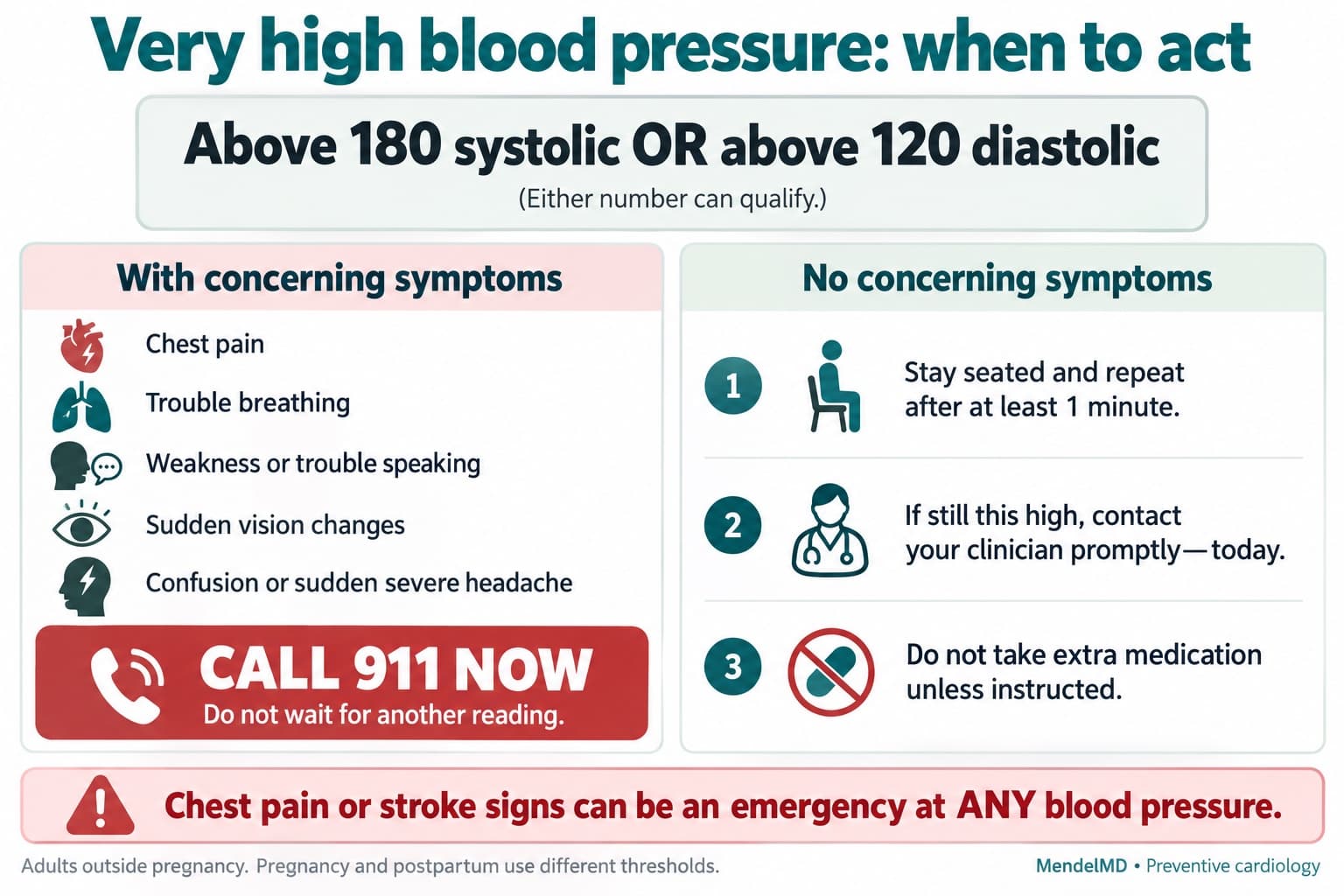
Call 911 now for chest pain, severe shortness of breath, new weakness or numbness, trouble speaking, or other signs of a heart attack or stroke. Do this regardless of the blood-pressure reading. Do not delay emergency care to find a monitor or repeat a measurement.
About this guide: This is MendelMD's independent, plain-language summary of the American Heart Association's “When To Call 911 About High Blood Pressure” recommendations. The adult action steps below restate that guidance; they are not a new MendelMD emergency protocol or an individualized care plan. The separate pregnancy and postpartum section draws on ACOG guidance, because different thresholds apply.
If your monitor shows a systolic pressure above 180 or a diastolic pressure above 120, the next step depends on how you feel. Either number is enough to warrant prompt attention; both do not have to cross the threshold.[1]
Educational use only. This content provides general health information. It does not constitute medical advice or medical care and is not a substitute for individualized guidance, diagnosis, or treatment from a qualified healthcare professional. Do not start, stop, or change treatment based on this page alone.
The 30-second takeaway
- Very high pressure with concerning symptoms: call 911. Do not wait for it to come down.
- Very high pressure without concerning symptoms: wait at least one minute, repeat the reading, and contact your clinician as soon as possible if it remains severely elevated.
- Pregnancy or the postpartum period: lower thresholds apply. A reading of 160 systolic or 110 diastolic or higher needs urgent maternity assessment.
Symptoms change the situation
A hypertensive emergency means severe hypertension with acute damage to organs such as the brain, heart, kidneys, or aorta. A monitor cannot tell you whether that damage is occurring. Symptoms and an in-person clinical assessment matter.[1][2]
Warning symptoms include chest pain, breathing difficulty, new severe back pain, new weakness or numbness, difficulty speaking, sudden vision changes, confusion, or a sudden severe headache. A very high reading alongside these symptoms should prompt emergency evaluation. Sudden severe symptoms can also be emergencies at lower pressures.
Call emergency services rather than driving yourself when a heart attack or stroke may be occurring. Do not wait to see whether resting or taking an extra pill fixes the problem.
What if I feel well?
Feeling well does not make a severely elevated reading something to ignore. It does change the immediate approach.
- Stop what you are doing and sit quietly. Support your back and arm, keep your feet flat, and avoid talking. Check that the cuff fits and is on bare skin.
- Wait at least one minute and measure again. If symptoms develop, stop repeating measurements and seek emergency care.
- If the repeat remains above 180 systolic or 120 diastolic, contact your clinician as soon as possible—today. Give both readings, your symptoms or lack of symptoms, and your medication list. If you cannot reach your team, seek timely in-person assessment rather than waiting for a routine appointment.
Severely elevated pressure without acute organ injury often does not require hospitalization. A clinician may adjust oral medication and arrange close follow-up. That decision depends on the assessment, not just the number on the screen.[1][2]
Do not take extra doses, borrow another person's medication, or try to lower the pressure rapidly unless your own clinician has given you a specific plan. More medication is not automatically safer; an abrupt fall can cause harm.
Pregnancy and after delivery: do not use the usual adult cutoff
High blood pressure during pregnancy or after delivery can signal preeclampsia, including in someone whose pregnancy had seemed uncomplicated. A systolic pressure of at least 160 or a diastolic pressure of at least 110 needs urgent assessment. Contact your maternity team immediately or seek emergency care; do not wait for the nonpregnant threshold of 180/120.[3]
Persistent severe headache, vision changes, pain in the upper abdomen, shortness of breath, chest pain, or seizures also require urgent evaluation. Tell the clinical team that you are pregnant or recently delivered. Concerning symptoms should not be dismissed because a home reading appears lower.
What to have ready for the clinical team
Bring the readings and their times, your monitor if practical, and a list of medications with doses and the time you last took them. Mention missed doses, recent medication changes, pain, illness, and over-the-counter products such as decongestants or anti-inflammatory pain relievers. This helps your clinician understand the situation; it should never delay emergency care.
Once the urgent issue has been addressed, a consistent home routine is useful for treatment decisions. The home blood pressure guide explains how to obtain that average. The main prevention guide covers longer-term treatment and habits.
Frequently asked questions
Is 180/120 always a hypertensive emergency?
It is a severely elevated reading that deserves prompt attention. A hypertensive emergency involves acute organ injury, which requires clinical assessment. With concerning symptoms, call 911; without symptoms, repeat after at least one minute and contact your clinician promptly if it remains severely elevated.
What if my reading is 185/95?
The systolic value alone is above the severe threshold. Both numbers do not have to be high. Follow the same symptom-based action plan.
Should I take an extra blood pressure pill?
Only if your clinician has specifically instructed you to do so for this situation. Otherwise, contact the clinical team for a treatment plan rather than improvising doses.
Can I have a stroke with blood pressure below 180/120?
Yes. Stroke signs require emergency care regardless of the reading. A home blood-pressure value cannot rule out a stroke or heart attack.
Your next step
If you are reading this because of symptoms now, act on the emergency guidance above. For routine prevention after an urgent problem has been addressed, start with Blood Pressure and Heart Health.
References
- American Heart Association. When to call 911 about high blood pressure. Reviewed August 14, 2025. Patient guidance.
- Bress AP, Anderson TS, Flack JM, et al. The management of elevated blood pressure in the acute care setting: a scientific statement from the American Heart Association. Hypertension. 2024. Statement.
- American College of Obstetricians and Gynecologists. Preeclampsia and high blood pressure during pregnancy. Patient guidance.
Continue exploring
Start with prevention, treatment, and a practical plan.
High Blood Pressure Stages →Interpret both numbers using the current U.S. categories.
How to Check Blood Pressure at Home →Choose a monitor and obtain a trustworthy average.
High Blood Pressure and Life Expectancy →Understand the longevity evidence and its limits.
Preventive Cardiology →
Mendel Jacobs, MD, MPH
Menachem "Mendel" Jacobs, MD, MPH is an Internal Medicine Resident at Yale School of Medicine pursuing academic cardiology. He publishes under Menachem Jacobs.
Connect on LinkedIn