AI in Medicine
Clinical AI evidence, medical language models, and practical reviews of tools such as OpenEvidence and ChatGPT.
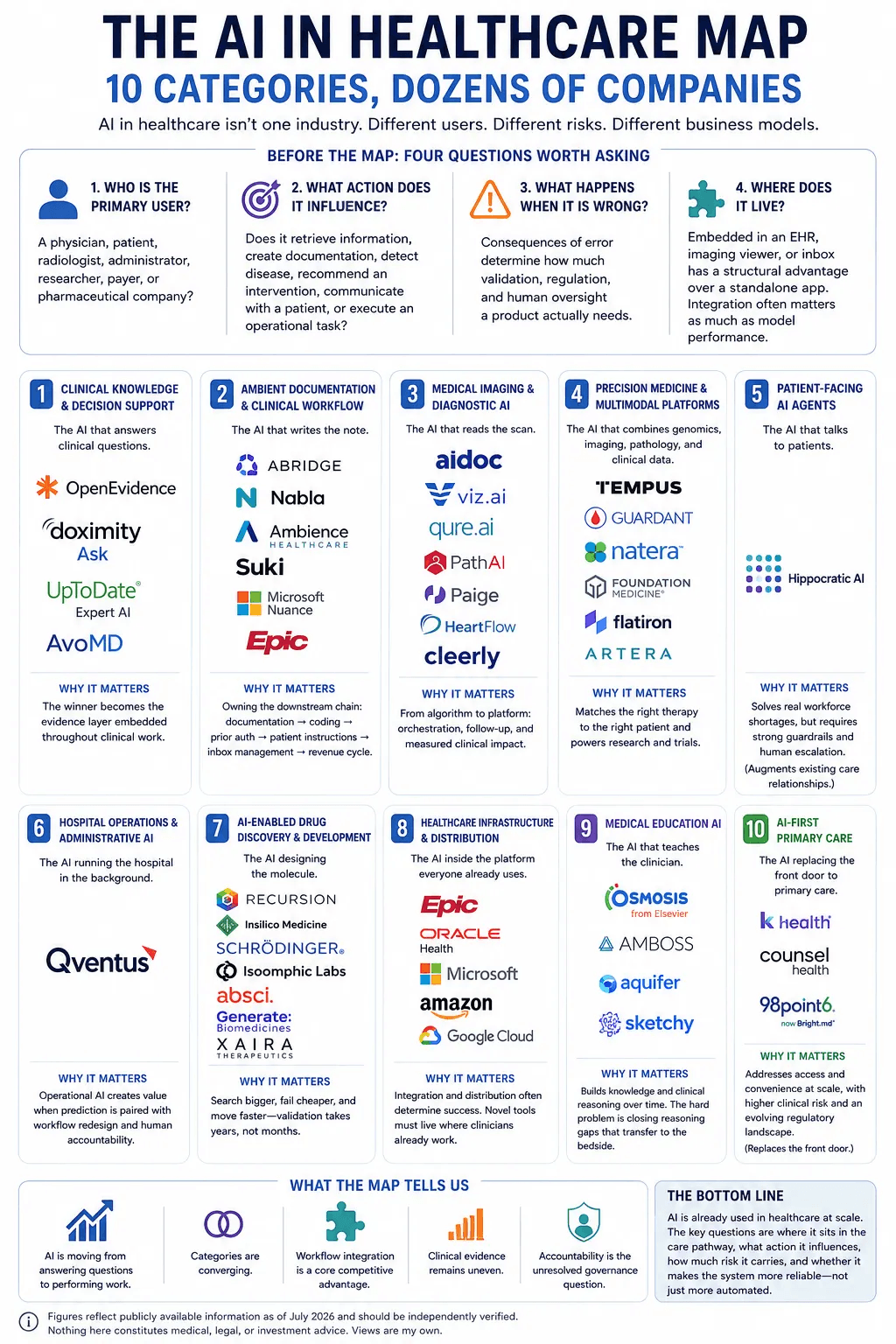
What should a clinician look for before trusting an AI tool? This collection examines artificial intelligence in medicine through the questions that matter in daily work: what a system was tested on, how its answers were evaluated, whether its citations support its claims, and what happened when people actually used it. The goal is to make research easier to read without turning a benchmark score into a verdict about clinical readiness.
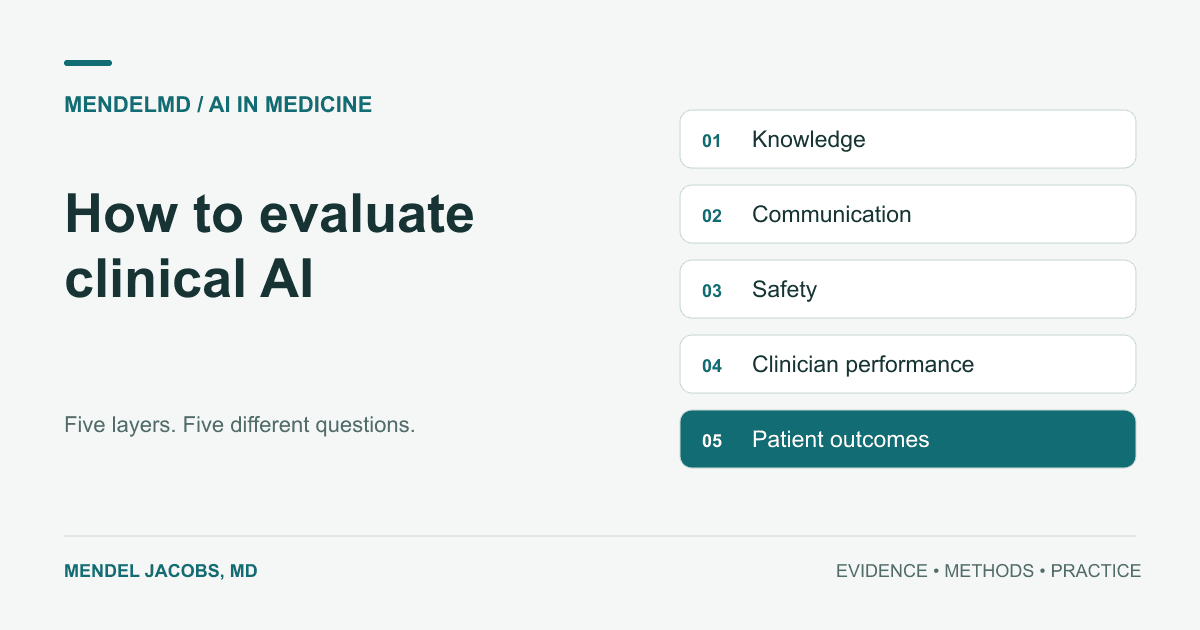
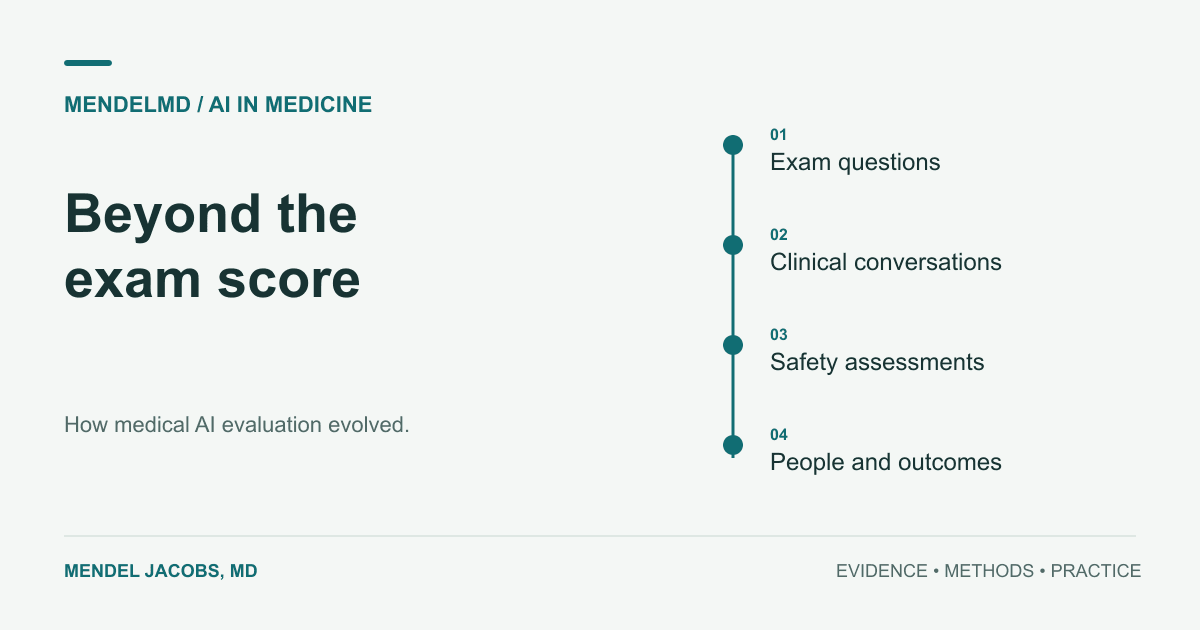
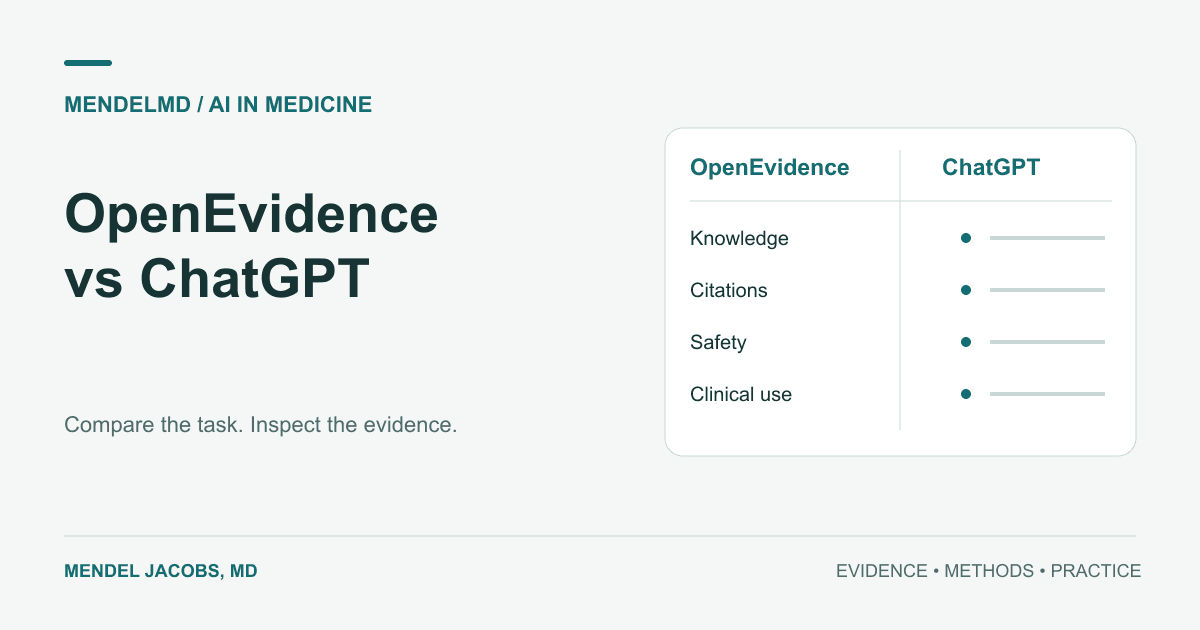
Start with the five-layer framework for evaluating clinical AI, then explore the history of medical benchmarks and the comparison of OpenEvidence with ChatGPT. These articles separate knowledge tests, communication, safety, clinician performance, and patient outcomes. Product names change quickly; understanding the evaluation gives you a more durable way to interpret the next announcement.
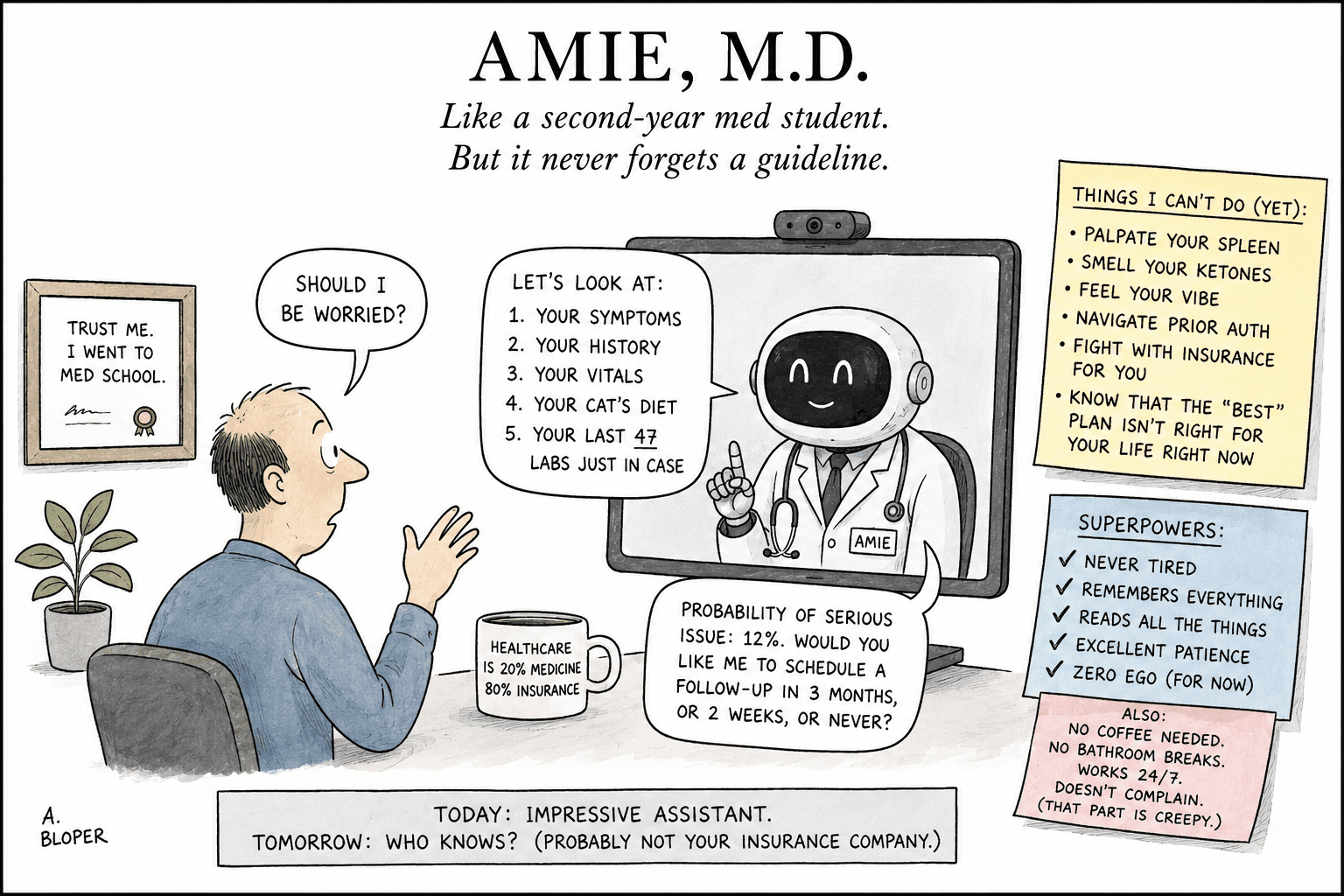
You will also find reviews of individual tools and research programs, including Google’s AMIE. Each article is an invitation to inspect the underlying evidence and its limitations. This is educational commentary from Mendel Jacobs, MD, not an endorsement of autonomous clinical decision-making. Use the linked studies to check the population, model version, comparison group, and outcome before carrying a finding into a different setting.